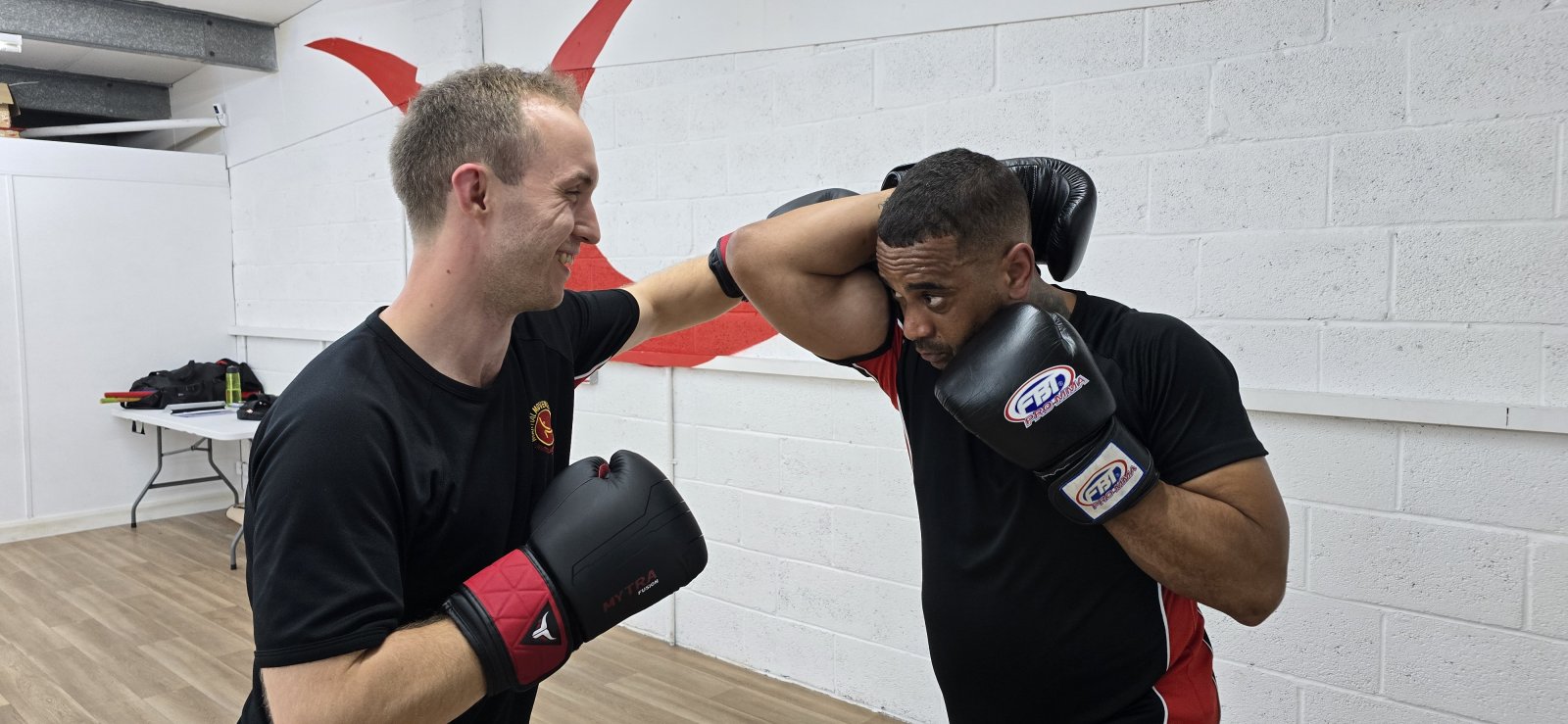
Quick Summary
The best martial arts clubs in Lichfield are judged on the styles taught, age groups catered for, class structure, beginner support and how clearly terms are explained. Martial Movement 360 offers a blended curriculum of Silat, Filipino Martial Arts, Jeet Kune Do and Boxing, with children’s classes from age 5 and adult classes twice a week for all levels.
- Check whether the club teaches a single art or a blended curriculum for practical self-defence.
- Ask how beginners are grouped and when controlled sparring is introduced.
- Martial Movement 360 runs adult classes twice a week for all levels.
- Children’s classes take beginners from age 5 upwards, with intermediates from 5 to 18.
- Request membership terms in writing, including what happens if you miss sessions.
Table of Contents
- How to Judge the Best Martial Arts Clubs in Lichfield
- Beginner Martial Arts Classes in Lichfield: What a First Session Involves
- Children’s Martial Arts Classes in Lichfield: Ages 5 to 18
- Adult Martial Arts Classes in Lichfield: Twice-Weekly Training for All Levels
- Self-Defence Classes in Lichfield: Practical Skills Versus Sport Moves
- Comparing Martial Arts Styles, Pricing and Class Access
- Booking a Free Lesson at Martial Movement 360
- Frequently Asked Questions
How to Judge the Best Martial Arts Clubs in Lichfield
Last Updated: 8 November 2026

Choosing from the martial arts clubs in Lichfield is harder than it looks. Many clubs describe themselves in similar terms, so the details matter more than the marketing. The useful question is what each club actually offers, who it suits, and how easy it is to start. At Martial Movement 360, we think the best clubs are judged on five things: the styles taught, the age groups catered for, the class structure, how beginners are supported, and how clearly the club explains its terms.
A martial arts club is the place where you learn a discipline through regular, structured training with an instructor. Classes usually combine technique, conditioning and sparring or drilling, and the mix varies a great deal between schools.
We recommend starting with four practical checks:
- Styles taught: Does the club teach a single art, or a blend? A blended curriculum suits people who want practical self-defence rather than sport-only skills.
- Age and level: Are there separate classes for children, adults and beginners, or one mixed group?
- Class frequency: How often do classes run, and can you attend at times that fit your week?
- Instructor experience: How long have the instructors been teaching, and what is their background?
Our own adult classes run twice a week and cater for all levels, from complete beginners to experienced students. That schedule suits people who want steady progress without committing to an intensive programme.
Be cautious about generic claims. Phrases such as “the best club in town” tell you very little. Ask for a clear description of the curriculum, the class structure and the cost, then compare those answers across clubs. For current prices, ask each club directly, or check the Martial Movement 360 website for our own current rates.
Beginner Martial Arts Classes in Lichfield: What a First Session Involves
A good beginner session should be predictable. A good session typically begins with a warm-up, followed by a short technique lesson, supervised partner drilling, and a cool-down. You do not need prior experience, and you do not need to be fit before you start. What matters is that the instructor explains the basic stance, how to move safely, and how to fall or defend without injury before asking you to try anything at speed.
Ask the club how beginners are grouped. The most helpful clubs keep new students with others at a similar level for the first few weeks, so you are not thrown into sparring with people who have trained for years. Controlled sparring is best introduced only once basic guard, movement and control are established. If a club cannot tell you when and how sparring is introduced, treat that as a question mark.
Watch out: a first session that begins with full-contact sparring or conditioning tests before any technique instruction is a sign the club has not thought through beginner safety.
Practical checks before you book:
- What to wear and bring: ask the club what it recommends for a first session, and whether loan gloves or pads are available.
- Accessibility and individual needs: ask about step-free access, parking, changing facilities and whether the instructor has experience adapting drills for disabilities, neurodivergent learners or people returning after injury. A club that answers these questions clearly is usually better organised across the board.
- Safeguarding and first aid: for any club teaching children, ask who holds a current first aid certificate, whether instructors are DBS-checked, and what the club’s safeguarding policy says. These are standard questions and a well-run club will answer them without hesitation.
- Instructor credentials: ask how long the instructors have been teaching and what their background is. Coaching qualifications and insurance are reasonable things to confirm before you commit.
Our children’s classes take beginners from age 5 upwards, with intermediate students from 5 to 18. Our adult classes run twice a week and cater for all levels, from complete beginners to experienced students.
Children’s Martial Arts Classes in Lichfield: Ages 5 to 18
For children, the right class depends on age and experience. Our children’s classes take beginners from age 5 upwards, and intermediate students from 5 to 18. Children build confidence, discipline and coordination in a structured setting, and the progression is designed to keep them engaged over time.
Parents often ask how a club keeps children interested. Look for varied sessions that mix technique, games and conditioning, and for instructors who adjust the pace to each child. Ask whether there are clear milestones, because visible progress is one of the strongest reasons children stay with an activity.
Adult Martial Arts Classes in Lichfield: Twice-Weekly Training for All Levels
Adult martial arts classes suit many goals, from fitness and stress relief to practical self-defence. Our adult classes run twice a week and cater for all levels, from beginners to experienced practitioners. Twice-weekly training is a sensible frequency for many adults.
When comparing adult classes, check whether beginners are taught separately, how sparring is introduced, and whether the club offers a free trial lesson so you can judge the atmosphere before committing.
Self-Defence Classes in Lichfield: Practical Skills Versus Sport Moves
Not every martial arts class teaches self-defence in the same way. Sport-focused training often works within rules, timing and scoring, which is valuable but different from responding to an unexpected threat. Self-defence classes focus on awareness, avoiding confrontation, and practical techniques that work under stress.

A common mistake is assuming that any martial art will translate directly to the street. Ask the club how its curriculum handles realistic scenarios, how it trains you to move and create distance, and whether it covers both striking and grappling. Our programme blends Silat, Filipino Martial Arts, Jeet Kune Do and Boxing.
Comparing Martial Arts Styles, Pricing and Class Access
Most clubs in and around Lichfield describe themselves in similar terms, so the useful comparison is not the marketing copy but a consistent set of practical criteria applied to every club you consider. Use the same questions for each one, so you are weighing like with like.
A workable framework covers six areas:
- Styles taught: single art or blended curriculum. A blended approach suits people who want practical self-defence rather than sport-only skills, while a single art suits those who want deep specialisation.
- Age groups and level separation: are children, adults and beginners taught separately, or in one mixed group? Ask how beginners are grouped and when sparring is introduced.
- Class frequency and timetable fit: how often classes run, and whether the times work with your week. Twice-weekly training is a sensible baseline for most adults; anything less makes steady progress harder.
- Trial access: whether there is a free lesson or a paid introduction, and what it includes.
- Terms and commitment: how membership is structured, what happens if you miss sessions, whether you can pause, and how notice periods work. Ask for these in writing rather than relying on a verbal summary.
- Safety and safeguarding: first aid provision, instructor insurance, DBS checks for anyone teaching children, and the club’s safeguarding policy.
Pricing is where clubs are hardest to compare, and it is also where the most useful questions live. Rather than rely on figures that may be out of date, ask each club for its current rates in writing, including any joining costs and equipment requirements. Then ask the questions that matter over time: what happens if you miss sessions, whether you can pause membership, and how much notice you need to give to stop. These terms often matter more than the headline rate.
Watch out: a club that will not put its terms in writing, or that cannot explain what happens if you miss sessions, is worth approaching with caution.
Accessibility and individual needs deserve the same consistent treatment. Ask about step-free access, parking, changing facilities, and whether drills can be adapted for disabilities, neurodivergent learners or people returning after injury.
Our own programme blends Silat, Filipino Martial Arts, Jeet Kune Do and Boxing, which gives students a broad toolkit rather than one narrow method. Our adult classes run twice a week and cater for all levels, from beginners to experienced students, and our children’s classes take beginners from age 5 upwards, with intermediate students from 5 to 18. If you want to judge the atmosphere before committing, ask about a trial lesson and visit in person.
The table below sets out the practical criteria to apply to each club, so you can compare them on equal terms.
|
Criterion |
What to ask |
Why it matters |
|---|---|---|
|
Styles taught |
Single art or blended curriculum |
Blended suits practical self-defence |
|
Age groups |
Are children, adults and beginners separated |
Keeps learners at a similar level |
|
Class frequency |
How often classes run |
Twice-weekly suits steady progress |
|
Trial access |
Free lesson or paid introduction |
Lets you judge before committing |
|
Terms |
Membership, missed sessions, notice periods |
Often matters more than headline rate |
|
Safety and safeguarding |
First aid, insurance, DBS checks |
Essential for any club teaching children |
Booking a Free Lesson at Martial Movement 360
The most reliable way to judge a club is to try it. At Martial Movement 360, we offer a free lesson so you can experience the training and see whether the class suits you or your child. Our instructor brings over 30 years of experience, and the programme is designed for all ages and fitness levels, with progression matched to individual ability.
If you are ready to try a class, you can book your free lesson through our website. Our Kids Self Defence Classes and Adult Self Defence Classes pages set out the details for each group.
Whichever club you choose, visit in person, ask the questions in this guide, and pick the one where the training, the people and the terms all make sense to you.
Frequently Asked Questions
What are the best martial arts clubs in Lichfield?
The best club depends on what you want: children’s classes, beginner-friendly adult training, self-defence focus or a particular style. Compare class styles, age groups, instructor experience and how easily you can try a session before committing. Martial Movement 360 offers integrated self-defence training that blends Silat, Filipino Martial Arts, Jeet Kune Do and Boxing, with programmes for all ages and fitness levels. Check current pricing directly with each club, as costs vary.
Are there martial arts classes for children aged five and over in Lichfield?
Yes. Martial Movement 360 accepts beginners from age 5 upwards in its children’s classes, with intermediate groups for children aged 5 to 18. Classes focus on discipline, confidence and practical self-defence in a structured, progressive format. Ask about the current class schedule and whether a trial session is available for your child.
How often should beginners train in martial arts?
Most beginners benefit from attending regularly, as consistency builds technique and confidence faster than occasional sessions. Martial Movement 360 runs adult classes twice a week, suitable for beginners through to experienced students. Start with the frequency you can maintain, then increase it as your fitness and confidence improve.